


Personality Tests & IQ Test
4.22.40K Reviews
App Specs
- Version
- 2.07
- Updated On
- License
- Free
- Downloads
- 1,000,000+
- Developer
- DevSect
- Categories
- Education
- Platform
- Android, iOS
Screenshots
 Analysis by AppCompare
I treat personality quizzes and IQ-style puzzles as two different kinds of entertainment: one invites reflection, while the other asks me to solve a problem. Personality Tests & IQ Test puts both under one roof, which makes it appealing if you’re curious about your habits and enjoy a mental challenge. I’d approach its results with curiosity rather than treating them as a formal assessment; that distinction matters when an app turns complicated parts of human behavior into a quiz.
What to consider before you begin
My first decision would be what I want from a test. If I’m looking for a light way to think about how I make choices, a personality quiz can be a useful prompt. If I want an authoritative psychological evaluation, or a score to guide a major decision, a casual app is the wrong tool. The same goes for IQ results: a puzzle score can be interesting, but it shouldn’t be mistaken for a clinical or professionally administered measure.
That boundary doesn’t make the app pointless. It helps me use it well. I’d answer personality questions based on how I usually behave, rather than how I’d like to behave, and take the result as a starting point for reflection. For the puzzles, I’d focus on the reasoning process and enjoy the challenge instead of treating a number as a verdict on my ability.
A convenient mix for curious moments
This is an education app from DevSect, and the combination of personality content and IQ-style challenges gives it a broader appeal than a single-topic quiz. Its free-to-download format lowers the barrier to trying it, while in-app purchases range from $3.99 to $99.99 per item, so I’d check the cost of anything I planned to unlock before committing. It is rated Everyone, and the current version is 1.97.
The app has an average rating of 4.3 from around 23,000 ratings, with about 2,300 written reviews, and it has been installed over one million times. Those figures suggest that it has found an audience, but they don’t tell me whether a particular test is right for my needs. I’d use the content itself—not popularity—as the basis for deciding whether to keep it.
One practical advantage of having both kinds of activities together is that I can choose according to my mood. On a quiet commute, I might prefer a short puzzle; when I have more time, I can sit with a personality questionnaire and think through the questions. A useful habit is to pause before taking another test and ask what I’m hoping to learn. That keeps the experience from becoming a string of scores with no real takeaway.
When another kind of resource is better
Compared with a dedicated brain-training app, this one is better suited to occasional curiosity than to a structured practice routine. Someone who wants scheduled exercises, measurable progress over time, or a narrowly focused skill program should look for an option built around that goal. Likewise, a person seeking evidence-based mental-health guidance should turn to a qualified professional or a reputable educational resource, not use personality quiz results as a diagnosis.
Worth Reading Before You Choose

EA SPORTS FC Mobile 26 Is a Bigger Football Game, but It Takes Time

Flipboard Shows What News Apps Must Do Beyond the Feed

Switching to Android Auto Means Rethinking Your Driving Routine

Google Calendar Makes a Crowded Week Easier to Manage

Ludo King Makes the Most of the Minutes Between Plans

Baby Panda World Brings Quick Play to Modern Phones, but Its Game Library Feels Busy
There’s also a trade-off in combining quizzes and puzzles: variety is convenient, but it can make the experience feel less focused if I arrive with one specific objective. Before spending on an optional item, I’d decide whether I want more variety, deeper reflection, or simply a quick diversion. If the answer is just a one-off puzzle, a free standalone alternative may be enough; if I enjoy moving between self-reflection and reasoning challenges, the bundled approach makes more sense.
For a realistic everyday use, imagine a student taking a break between study sessions. A puzzle can offer a change of pace, while a personality questionnaire might prompt a useful thought about preferred ways of working. I’d keep that thought modest—for example, noticing that I prefer planning before starting—and test it against actual experience rather than assuming the quiz has explained me. That small check is more useful than sharing a label without context.
Discovering Your Inner Self
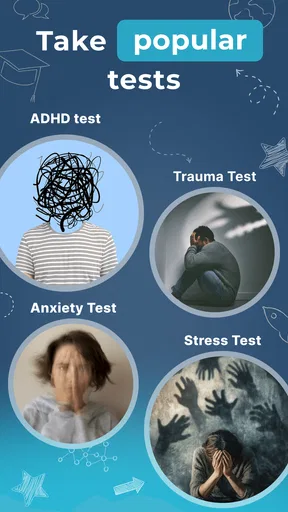
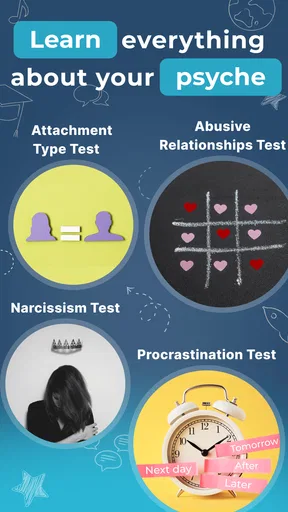
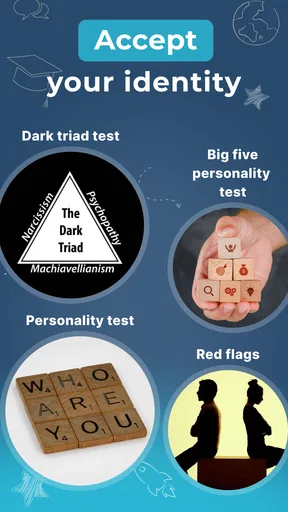
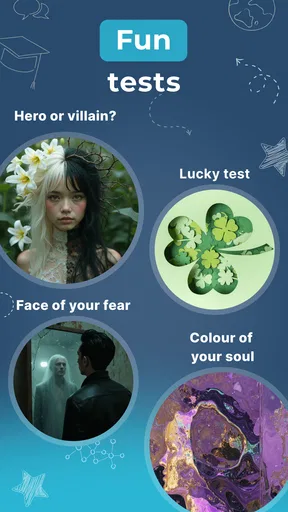
First things first, the personality tests are the real deal. I mean, who doesn't want to know if they're more of an introvert or an extrovert, or if they belong to the rare breed of ambiverts? The app offers a variety of tests that delve into different aspects of your personality, from emotional intelligence to career suitability. What I love about it is that the questions are straightforward, yet thought-provoking. They really make you reflect on your preferences and behaviors.
The results are detailed, giving you a breakdown of your personality type with an easy-to-understand explanation. Plus, they throw in some tips on how to leverage your strengths, which I found super helpful. Oh, and did I mention they include famous personalities who share your type? It’s kinda cool to know you have something in common with, say, Albert Einstein or Oprah Winfrey.
Brain Teasers and IQ Challenges
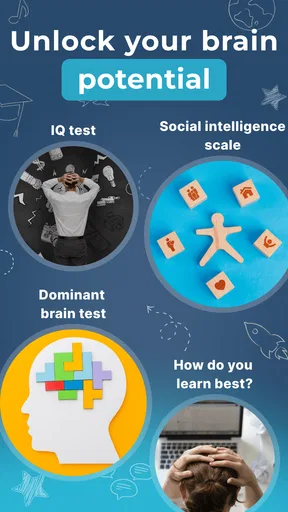
Now, onto the IQ tests. These are not your average "what's 2 + 2" kind of questions. The app challenges you with a mix of logical reasoning, pattern recognition, and spatial awareness puzzles. Honestly, it was like giving my brain a fun workout session. I won’t lie, some questions stumped me for a while, but the sense of achievement once you solve them is totally worth it.
The IQ test scores come with a detailed report that not only tells you where you stand but also highlights areas for improvement. It’s great if you’re someone who’s constantly looking to push your cognitive boundaries.
One way I’d get more out of those puzzles is to notice what kind of mistake I make, rather than immediately retaking a test to chase a better result. A missed pattern, a rushed choice, and a spatial puzzle that needs a different approach are not the same problem. Taking a moment to explain my reasoning to myself can turn a score into a small learning exercise. It also avoids the trap of treating repeated attempts as proof of lasting improvement when familiarity with the questions may be doing some of the work.
I’d also choose the setting carefully. If I’m interrupted, tired, or trying to finish between notifications, a result may say more about that moment than about my reasoning. For a more satisfying session, I’d set aside a quiet stretch, read each question slowly, and stop when I’m no longer paying attention. This is a practical way to enjoy the challenge without adding pressure or reading too much into the outcome.
User Experience and Interface
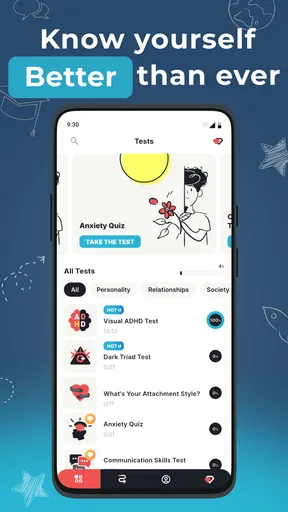
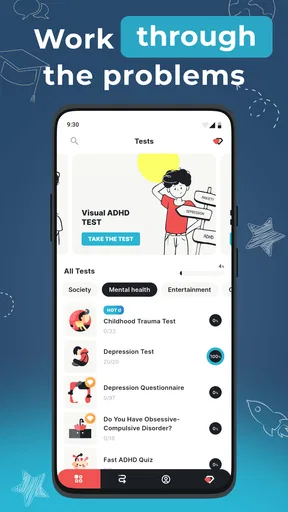
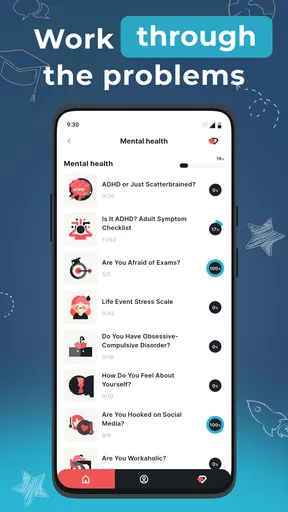
One thing I can’t overlook is how user-friendly the app is. The interface is clean and intuitive, making navigation a breeze. Everything is neatly categorized, so you can easily switch between personality tests and IQ challenges without any hassle. The design is visually pleasing, with a modern touch that doesn’t overwhelm you with bright colors or unnecessary graphics.
Also, kudos to the developers for ensuring the app runs smoothly with no glitches or crashes. It’s compatible with both Android and iOS, so you’re covered no matter what side of the smartphone war you’re on.
There are a couple of questions I’d settle before making this a regular habit. The app is free to download, but optional purchases can add up, so I’d treat each purchase as a separate decision rather than assuming every test or result is included at no cost. If I’m installing it mainly for free activities, I’d first explore what is available without paying and avoid starting a purchase flow just to see where it leads.
It is also sensible to think about how personally revealing my answers are. Personality questions can touch on work preferences, emotions, and behavior, so I’d answer only as openly as I’m comfortable doing on a phone. I wouldn’t enter sensitive details that a quiz does not need, and I’d avoid sharing a result with friends or colleagues unless I genuinely wanted to. A light quiz can be a conversation starter, but a label can be misunderstood when it is separated from the questions and context behind it.
Why You Should Dive Into It
If you’re like me, someone who loves peeling back the layers of their own mind, Personality Tests & IQ Test is a gem. It’s not just about finding out how smart you are or what personality type you belong to; it’s about understanding yourself better and using that knowledge to improve various aspects of your life.
The app also offers some fun quizzes for those days when you’re just looking to kill time but still want to feel productive. Plus, it’s a great conversation starter. Imagine discussing your personality type at a dinner party or comparing IQ scores with friends. It’s bound to spark some interesting debates!
I’d recommend it most to people who enjoy quizzes, want a low-pressure prompt for self-reflection, or like solving logic and visual puzzles now and then. It is less suitable for anyone who needs a formal psychological assessment, a dependable measure of intelligence, or a carefully structured program for building a particular skill. In those cases, a professional assessment, focused learning material, or a dedicated training tool is a better fit than a mixed quiz app.
Another useful way to handle the personality results is to treat them as questions, not instructions. If a report suggests a strength, I’d ask myself where that shows up in daily life and where it doesn’t. If it points toward a career preference, I’d compare that suggestion with my actual interests, experience, and constraints. This makes the app a prompt for thinking rather than a shortcut to decisions it cannot make on my behalf.
To wrap it up, if you’re up for some introspection coupled with a bit of brain stretching, this app is definitely worth a download. Just make sure your phone’s charged because you might find yourself getting lost in it for hours!
My recommendation is to try it with realistic expectations: enjoy the questions, take useful observations with you, and leave any claim of certainty behind. It suits someone who wants two kinds of casual mental activity in one place; it won’t replace professional guidance or a purpose-built learning plan. If that distinction works for you, the mix can make for an engaging break and an occasional nudge to think about how you approach problems.
Pros
- User-friendly interface enhances experience.
- Diverse range of tests available.
- Detailed analysis of results provided.
- Offline mode for convenience.
- Regular updates with new tests.
Cons
- Contains ads that can be distracting.
- Some features require in-app purchases.
- Occasional bugs in test loading.
- Limited customization options.
- Requires internet for initial setup.
FAQs for Personality Tests & IQ Test
What features does the Personality Tests & IQ Test app offer?
The Personality Tests & IQ Test app provides a range of features, including various personality assessments, IQ tests, and detailed results analysis. Users can explore different psychological models such as the Big Five, MBTI, and more. Additionally, the app offers progress tracking, personalized tips, and comparisons with global averages.
Is the Personality Tests & IQ Test app free to use?
The app offers a combination of free and premium features. Users can access basic personality tests and select IQ quizzes for free. However, for a more comprehensive experience, including advanced insights and personalized reports, a subscription or one-time purchase might be required.
How accurate are the test results provided by the app?
The app employs well-researched psychological models and standardized testing methodologies to deliver reliable results. While the tests are designed to be accurate, individual outcomes may vary. The results should be taken as a general guide and not a definitive assessment of one's personality or intelligence.
Is my data secure with the Personality Tests & IQ Test app?
User privacy and data security are top priorities for the app developers. The app uses encryption to protect data and complies with relevant data protection regulations. Users can choose to keep their results private or share them with others at their discretion.
Can the app be used offline?
The Personality Tests & IQ Test app requires an internet connection for initial downloads and accessing most features. However, once tests are downloaded, some can be taken offline. To sync results and access personalized insights, users will need to reconnect to the internet.


